Culture as Declaration: The Harlem Renaissance
The Harlem Renaissance was more than a creative era — it was a collective declaration of Black identity, intellect, and cultural authority. In a time of deep constraint, Black artists, writers, and thinkers reshaped how they were seen and how they understood themselves, creating a foundation that would carry forward long after the moment itself passed.

Photo by The New York Public Library on Unsplash
Before political power could be claimed and before legal barriers began to shift, Black Americans asserted something just as enduring: presence.
The Harlem Renaissance was not a spontaneous artistic flourish. It was an intentional cultural movement — a collective insistence on complexity, refinement, and intellectual seriousness at a time when Black life was routinely reduced to caricature. Through art, music, literature, and thought, Black creators reshaped public perception and asserted the fullness of their humanity.
This moment emerged from movement. The Great Migration carried millions of Black Americans from the rural South into Northern urban centers, seeking safety, opportunity, and possibility. Harlem became one of the most significant concentrations of Black intellectual and cultural life in the world. In close proximity, artists, writers, musicians, and thinkers exchanged ideas, challenged one another, and generated momentum that could not have existed in isolation.
What distinguished the Harlem Renaissance was not only creativity, but intention. Writers, poets, musicians, and visual artists rejected the stereotypes imposed upon them and replaced them with narratives rooted in heritage, dignity, and self-definition. Jazz, literature, and visual art became vehicles for asserting authority — not simply as protest, but as proof.

The New York Public Library. "The Crisis, [cover]" The New York Public Library Digital Collections. https://digitalcollections.nypl.org/items/a03e9160-2bf8-0134-46a9-00505686a51c
This cultural assertion was supported by infrastructure. Magazines and organizations such as The Crisis, Opportunity, The Messenger, and Negro World provided platforms through which Black voices could circulate widely. These publications did more than showcase talent; they shaped discourse, supported artists, and reinforced the idea that Black creativity deserved permanence and serious engagement.
At the center of this effort stood Alain Locke, often called the dean of the Harlem Renaissance. Locke was not the most visible artist of the era, but he was among its most influential architects. As a philosopher, educator, and cultural organizer, he helped frame the movement intellectually and positioned Black art as worthy of academic and institutional recognition.
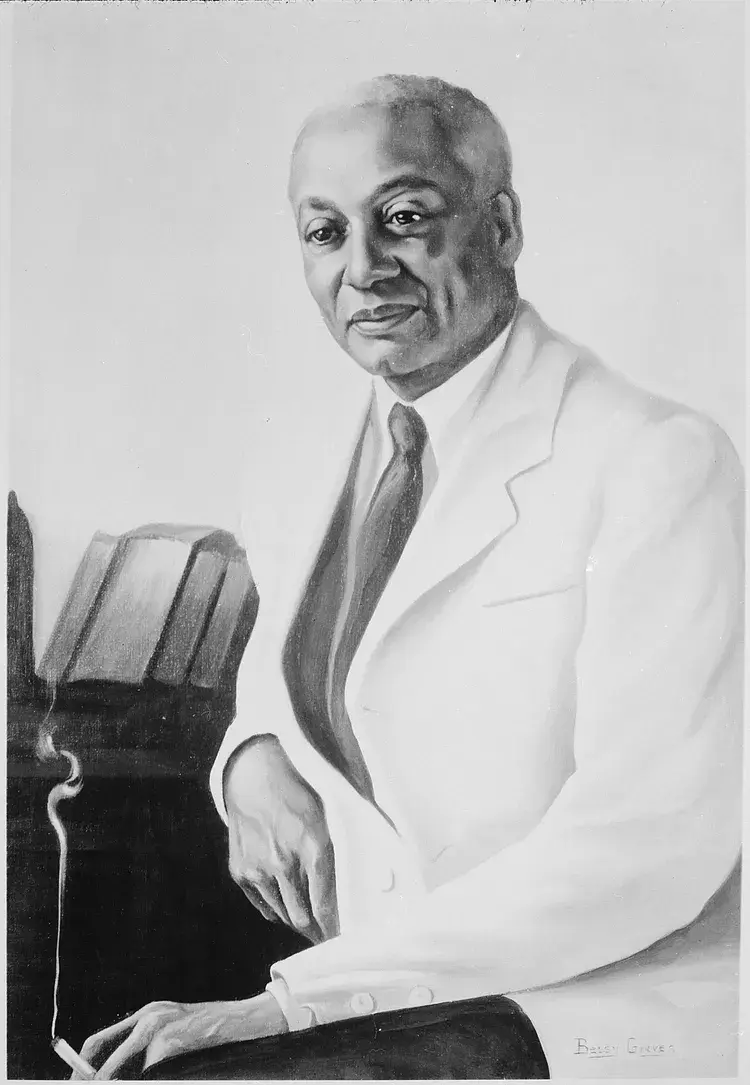
U.S. National Archives and Records Administration / Wikimedia Commons / Public Domain
Locke believed Black identity could not be confined to national borders. Through his work and organizations such as the African Union Club and the Cosmopolitan Club, he fostered connections between African American, African, and Caribbean thought. He advocated for writers, poets, and visual artists, helped secure funding, and insisted that Black art be treated not as novelty, but as legitimate cultural achievement. His role was not to dominate the Renaissance, but to curate, defend, and elevate it.
This work did not unfold without resistance. Racism limited access to resources and recognition, even as creativity flourished. Locke himself faced institutional opposition, including dismissal from Howard University amid disputes over pay equity and the ethical direction of Black studies — a reminder that even within Black institutions, the pursuit of excellence and fairness carried risk. His eventual reinstatement affirmed the lasting value of his vision.
As the Great Depression took hold, the economic support that had sustained much of the Renaissance narrowed. Patronage declined, publishing opportunities slowed, and institutional backing shifted. The movement did not disappear — it adapted. Many artists turned to teaching, traveled abroad, or refined their craft beyond Harlem, exploring identity outside the narrow confines imposed by the United States.
What the Harlem Renaissance ultimately established was not a moment, but a foundation. It demonstrated that Black culture could assert authority, sophistication, and global influence even under constraint. The cultural confidence shaped during this era traveled forward — informing future artistic movements, strengthening collective pride, and laying intellectual groundwork that later struggles for civil rights would build upon.
What was declared in Harlem did not remain there. Its influence moved, adapted, and endured — a reminder that culture, once claimed, continues to speak.


