Faith as a Framework
- Feb 4
- 3 min read
James Varick and the Foundation of Freedom
Faith wasn’t just spiritual refuge — it was a framework for education, self-governance, and future generations.

Schomburg Center for Research in Black Culture, Jean Blackwell Hutson Research and Reference Division, The New York Public Library. (1921). James Varick; [The first bishop of the African Methodist Episcopal Church in 1822.] Retrieved from https://digitalcollections.nypl.org/items/2822ab60-c6f2-012f-c4ce-3c075448cc4b
For many Black Americans navigating the early years of the so-called “free” world, faith became more than belief. It became structure. It created places where learning could happen, leadership could form, and communities could support one another when public systems fell short or shut them out. Few figures embody that reality more clearly than James Varick.
Born in New York City to an enslaved mother and a free Black father, Varick’s life unfolded in a nation still deciding who freedom truly applied to. He was free himself by the mid-1760s, but freedom came with limits. Like many Black men of his time, Varick learned trades, working as a shoemaker and tobacco cutter, because Black clergy were rarely paid and economic options were narrow. Skilled labor was not simply work; it was survival.
Varick joined John Street Methodist Episcopal Church, a predominantly white congregation. While Methodism spoke of equality in principle, practice told a different story. Black worshippers were pushed into balconies and back rows, reminded even in sacred spaces of their constrained place. When Varick was appointed to preach, his leadership stirred tension. His presence quietly challenged an unspoken rule: faith could be shared, but authority could not.
In 1796, Varick and roughly thirty other Black congregants withdrew. The decision was not about separation for its own sake; it was about dignity, autonomy, and the right to build something lasting. By 1800, they had established Zion Church near Wall Street, laying the groundwork for what would become the African Methodist Episcopal Zion Church.
What grew from that choice extended well beyond worship. Zion churches became centers for education at a time when Black children faced limited, segregated, or unequal access to public schooling. Community-based learning helped fill gaps left by systems that were inconsistent at best and exclusionary at worst. Literacy and instruction were nurtured not as luxuries, but as preparation — tools for leadership in a society that denied it to many.
Varick’s vision also addressed financial survival. In 1810, he helped establish the New York African Society for Mutual Relief, an organization that provided burial assistance and support for widows and orphans. These mutual aid societies offered a measure of economic security when banks, insurance, and public assistance were largely inaccessible to Black families. Quietly and collectively, they built stability where none was guaranteed.
His work extended into civic life as well. Varick served as vice president of the New York African Bible Society, supported efforts to abolish slavery, and joined others in petitioning the New York State Constitutional Convention in 1821 to expand voting rights for Black men. He also helped lay the groundwork for Freedom’s Journal, the first Black-owned and operated newspaper in the United States, recognizing that education and economic progress required control over information and voice.
That same period marked a turning point for the church itself. In 1821, the AME Zion Church formally organized as an independent denomination, and in 1822, James Varick was elected its first bishop. Under his leadership, the church became known as “The Freedom Church” — not as a slogan, but as a reflection of its purpose. It stood as living proof that Black institutions did not require white oversight to be legitimate, effective, or enduring.
Varick’s legacy sits at the intersection of faith, education, and financial independence. He understood that belief alone was not enough. Communities needed schools, mutual aid, civic engagement, and leadership rooted in responsibility. Faith provided the framework — a place to organize, to teach, to support, and to imagine a future larger than survival.
In a time when freedom was fragile and conditional, James Varick helped build foundations that allowed Black communities not just to endure, but to grow. The institutions he shaped carried seeds forward — into classrooms, households, civic life, and generations that would continue the work long after his own.
Faith, in Varick’s hands, became more than worship. It became a blueprint.
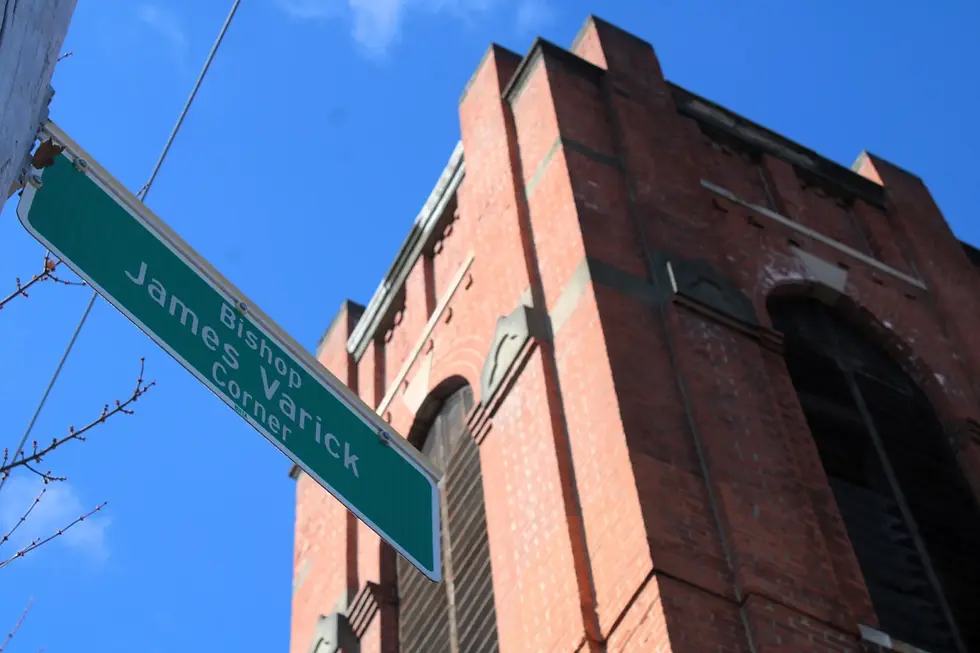
Photo credit: Thomas Breen / New Haven Independent (2025).


